Harmonizing Promotional Timelines with Slot Volatility Profiles to Maintain Long-Term Player Activity
Clara Griffin · Aug 11, 2026
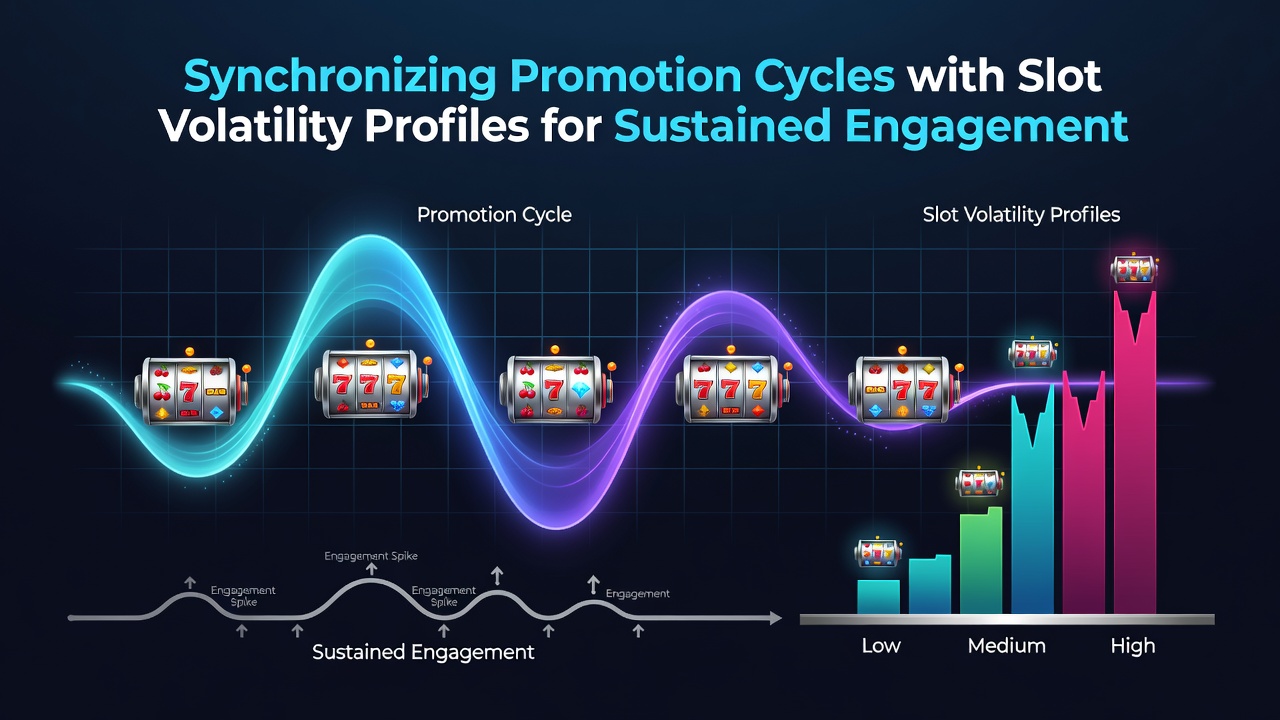
Harmonizing Promotional Timelines with Slot Volatility Profiles to Maintain Long-Term Player Activity
Operators in the online gaming sector have begun aligning bonus schedules more closely with the inherent volatility characteristics of individual slot titles, and this approach relies on data patterns that track player session lengths across different game types. High-volatility slots typically feature infrequent but substantial payouts while low-volatility options deliver smaller wins at higher frequencies, and matching promotional cycles to these profiles allows platforms to adjust free spin distributions or deposit match offers accordingly. Research from the International Gaming Institute at the University of Nevada indicates that such coordination can extend average session durations by coordinating reward timing with payout rhythm expectations.
Defining Volatility Categories in Slot Design
Slot volatility functions as a core mathematical parameter that determines payout distribution over time, and analysts categorize games into low, medium, and high tiers based on return-to-player variance calculations. Low-volatility titles often appeal to players seeking steady small returns that support extended play periods, whereas high-volatility machines attract those pursuing larger jackpots despite longer dry spells between wins. Medium-volatility options occupy the middle ground and frequently serve as transitional choices during promotional campaigns that shift focus between engagement styles. Data compiled by the New Jersey Division of Gaming Enforcement shows consistent reporting of these categories across regulated markets, with operators using standardized variance metrics to inform marketing decisions.
Promotion Types and Their Natural Alignment Points
Free spin offers tend to pair effectively with low-volatility slots because the frequent small wins reinforce the steady reward loop that these games already provide, and deposit bonuses often complement high-volatility titles by supplying extra bankroll to weather extended sequences without returns. Cashback promotions work across multiple volatility levels since they return a percentage of losses regardless of payout frequency, yet operators increasingly time these refunds to coincide with peak volatility-specific activity windows. Multipliers and progressive contributions appear more often in campaigns targeting high-volatility games, where larger prize pools justify the added incentive layers. Industry reports note that August 2026 saw several major platforms testing staggered rollout schedules that introduced volatility-matched bonuses at different intervals throughout the month.
Implementation Strategies for Cycle Synchronization
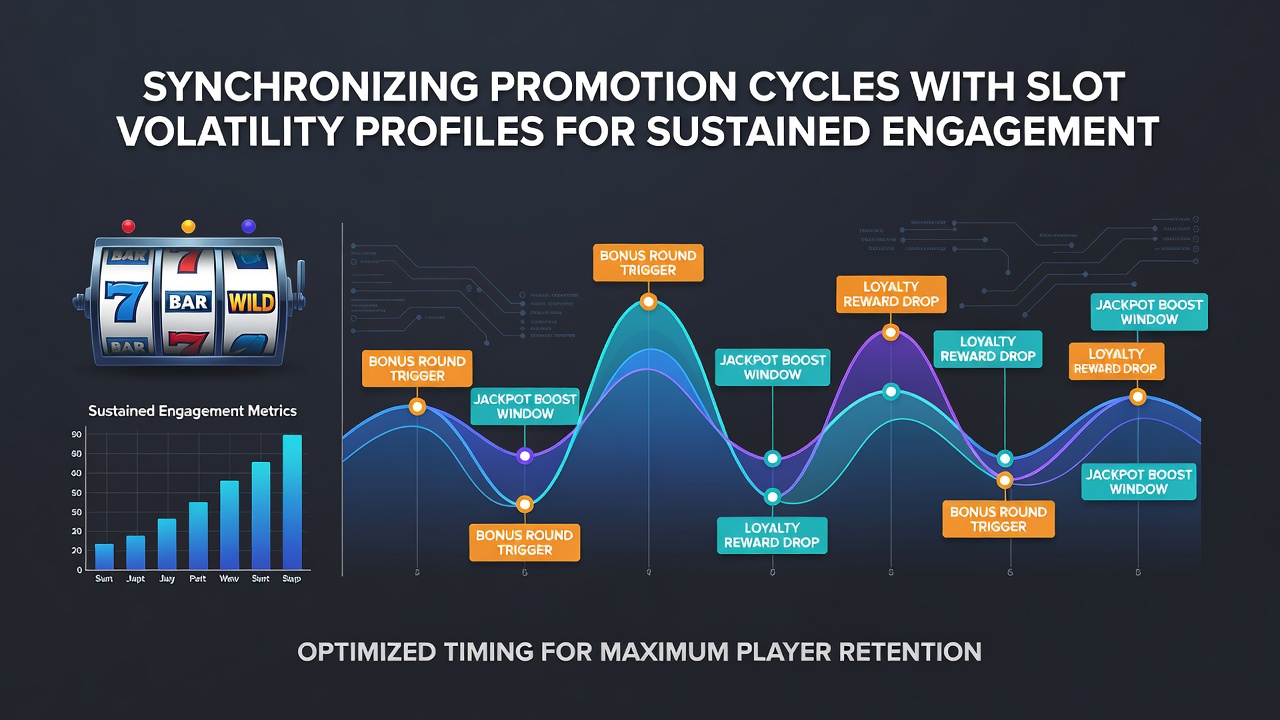
Platforms employ analytics dashboards that monitor real-time player behavior metrics and then trigger promotional adjustments when session data deviates from expected volatility patterns. One common method involves front-loading free spin allocations during the first week of a monthly cycle for low-volatility games, then shifting emphasis to bonus credit offers for high-volatility selections in subsequent weeks. This sequencing prevents player fatigue by varying reward types in line with each game's natural payout cadence. Operators also segment user cohorts according to historical volatility preferences, allowing automated systems to deliver tailored offers that sustain activity levels across different game libraries. External audits confirm that these layered approaches reduce early session abandonment rates when properly calibrated.
Observed Outcomes from Recent Market Adjustments
Tracking data collected through August 2026 reveals measurable shifts in engagement duration when promotional timing aligns with volatility profiles, and several operators reported steadier daily active user counts compared with previous unsynchronized campaigns. Players who received volatility-matched incentives demonstrated longer retention intervals between logins, particularly when low-volatility games received frequent small promotions while high-volatility titles received larger but less frequent boosts. Regulatory filings from multiple jurisdictions document these patterns without attributing causation, yet the consistency across datasets suggests a structural relationship between timing precision and sustained activity. Platforms continue refining segmentation algorithms to account for regional preference variations that influence how volatility interacts with promotional appeal.
Technical Tools Supporting Alignment Efforts
Modern casino management systems integrate volatility indexing directly into customer relationship management modules, enabling real-time offer customization based on live game performance data. These tools calculate expected session lengths for each volatility tier and then schedule promotional triggers to intersect with anticipated drop-off points. Machine learning models further refine these predictions by incorporating historical player responses to similar alignments, creating feedback loops that improve future cycle planning. Observers note that the technical infrastructure required for precise synchronization has become standard among larger operators, while smaller platforms adopt simplified versions through third-party providers.
Conclusion
Synchronizing promotion cycles with slot volatility profiles represents a data-driven method for supporting consistent player engagement across diverse game libraries. Operators apply volatility classifications to guide the timing and type of bonuses distributed, and available metrics from August 2026 onward illustrate how these alignments correspond with steadier activity patterns. Continued refinement of analytics capabilities allows platforms to maintain this coordination at scale while adapting to evolving player behaviors observed across different regulatory environments.